

Why clever storage matters more than you think
Storage is often treated as a practical afterthought.
Something to “fit in” once the main design is resolved.
But in reality, it has a huge impact on how a space feels and functions day to day.
We worked on a family room where we designed a large piece of fitted joinery — a bookcase and TV unit that sat comfortably within the room. At first glance, it looks fairly straightforward.
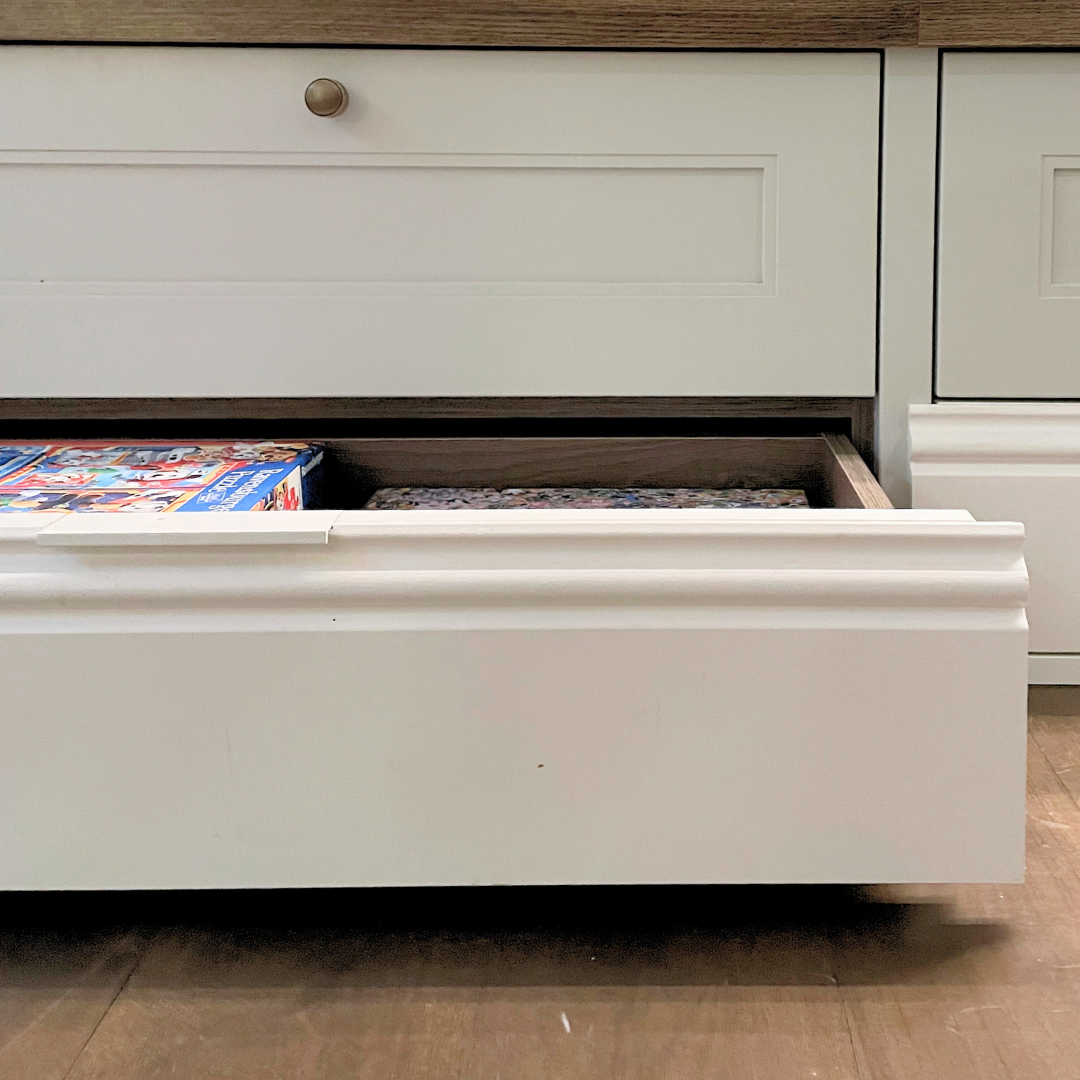
But at the base, we continued the Edwardian skirting profile across the front and used it to conceal four shallow drawers, each with a discreet finger pull.
They’re just the right size for children’s puzzles and smaller items.
Nothing complicated. Nothing expensive.
But it completely changed how the space worked.
The children could access their own things easily, tidy them away themselves, and the room stayed calm without feeling overly controlled.
That’s usually the difference.
Good storage isn’t about having more of it. It’s about having the right kind, in the right place.
We often work through storage early in the design process — not just how much is needed, but what is actually being stored, and where it naturally wants to live.
Because without that thinking, things tend to migrate.
You end up with a playroom that’s rarely used, and everyday items spread across the main living spaces with nowhere obvious to go.
Whereas when storage is considered properly, the house feels easier to live in.
It supports how you use it — rather than constantly needing to be reset.