

Why early decisions matter more than you think
The biggest decisions in a project often happen earlier than people expect.
And they’re not always the obvious ones.
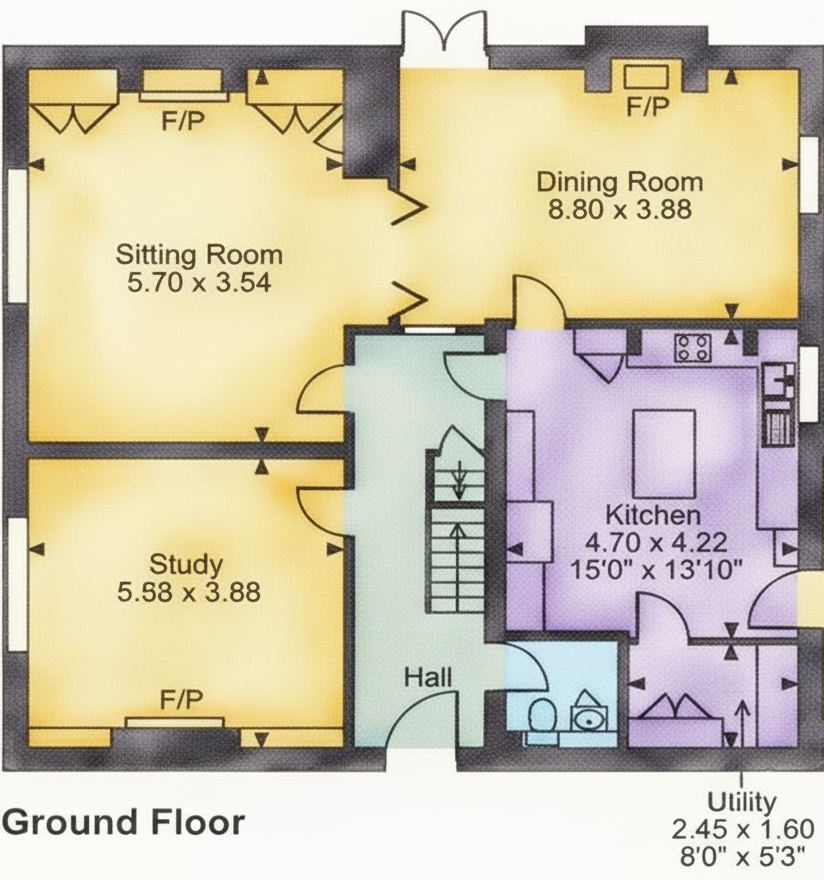
We worked on a Grade II listed Georgian house where, at first glance, the layout seemed perfectly logical. Four well-proportioned rooms across the ground floor, original fireplaces intact, beautiful symmetry.
Nothing was “wrong”.
But something wasn’t working.
The conversation that unlocked it wasn’t about structure or planning — it was about the TV.
The main living rooms faced a stunning south-east rose garden, with full-height sash windows and beautiful natural light. Ideal, on paper.
But that same light made them difficult to use for everyday living. The options were either placing a TV too high above the fireplace — which is never comfortable — or awkwardly off to the side, competing with the original focal point.
Both solutions felt compromised.
And more importantly, they didn’t reflect how the house was actually going to be used.
So we stepped back.
Instead of trying to “solve” the TV, we rethought the layout.
We introduced a subtle archway between the two formal living rooms — respecting the listed structure — and relocated the kitchen into this garden-facing space. It became somewhere you could enjoy morning light, have breakfast with the doors open, and actually spend time.
The existing kitchen, on the darker north side, became a family room — the perfect place for integrated joinery, a well-positioned TV, and more relaxed, everyday use.
Nothing about the footprint changed.
But everything about how the house worked did.
That’s the nature of early decisions.
They’re rarely isolated.
A question about a TV becomes a conversation about light, use, hierarchy of spaces, and how a house supports modern life within a historic framework.
If those decisions are made too quickly — or not fully explored — you often end up working around them later.
Whereas when they’re properly tested, the rest of the project tends to fall into place much more naturally.
It’s not about overthinking.
It’s about giving the right decisions the time they deserve.